Practical guidance. Helpful resources. A little encouragement every week.
💙 From the Editor
You Are Not Alone
Becoming a caregiver can happen gradually — or overnight. One day you are simply helping someone you love. The next day you may find yourself managing appointments, medications, paperwork, and decisions you never expected to make. If this is where you are today, we want you to know: you are not alone. Each week, we'll bring you practical information, helpful resources, and encouragement designed to make caregiving a little easier. Welcome to the KinCaring community.
🌱 Caregiving 101 · Lesson 1
I Just Became a Caregiver. Now What?
Your first step is not learning everything. Your first step is getting organized.
1. Understand the situation — What has changed? What does my loved one need help with? What decisions need to be made now?
2. Gather information — Create one place for medical information, medications, insurance, and important contacts.
3. Build your support circle — Caregiving works best when shared. Identify family, friends, healthcare providers, and community resources.
📰 This Week in Caregiving
Healthcare changes — updates that may affect families. New resources — programs and tools designed to help caregivers. Technology advances — new solutions making caregiving easier.
💰 Save Money This Week
Caregiving expenses add up quickly. This week's reminder: keep track of medical supplies, transportation, home modifications, prescription costs, and care services.
⭐ Product Spotlight
The Caregiver Essential Checklist
Before buying another product, start by understanding what you actually need. We review products on ease of use, safety, value, and real caregiver experience.
❤️ Caring for the Caregiver
A reminder: you matter too. This week, take ten minutes to do one thing that restores you — a short walk, a call with a friend, a quiet cup of coffee. Small moments matter.
📋 Free Resource — Your Gift This Week
The KinCaring Caregiver Companion™
Your first 90-day guide includes checklists, care planning tools, a medication organizer, home safety review, and a caregiver self-check.
If you are regularly helping someone with their health, daily activities, appointments, finances, transportation, or decisions — you are providing care. Many caregivers don't recognize themselves because they are family.
Next week in Caregiving 101: The 10 Documents Every Caregiver Should Have.
📬 Enjoying this article?
Get more like it every Tuesday — practical caregiving guidance, free.
✓ You're in! First issue coming soon.
Past issues
Every past issue, in one place.
Issue 11
The 15-minute care binder
Building the one document every hospital visit will ask for.
July 23, 2026
Issue 10
What Medicare actually covers at home
The coverage gaps that surprise families most.
July 16, 2026
Issue 9
Talking to a parent who refuses help
Three conversation openers that don't start a fight.
July 9, 2026
Issue 8
The burnout checklist, revisited
Our most-forwarded issue, updated with reader feedback.
July 2, 2026
New to caregiving? These three things will help most.
New caregiver guide
Start here if you just became a caregiver and don't know where to begin.
Caregiver assessment
Answer a few questions to get a personalized starting point.
First 90 days
A practical guide for beginning the caregiving journey with confidence.
The foundational guides every new caregiver reaches for first — 85 articles, organized by what you're facing right now.
🧭 Getting Started
Understanding the Different Types of Caregiving Roles
📖 Caregiving 101 · Getting Started
Building Your Care Team: Who You Actually Need
📖 Caregiving 101 · Getting Started
How to Have the First Conversation About Needing Help
📖 Caregiving 101 · Getting Started
The Caregiver's Starter Toolkit: What to Buy First
📖 Caregiving 101 · Getting Started
I Just Became a Caregiver: What Do I Do First?
📖 Caregiving 101 · Getting Started
What Is a Family Caregiver? Understanding Your New Role
📖 Caregiving 101 · Getting Started
The First 72 Hours: A New Caregiver Action Plan
📖 Caregiving 101 · Getting Started
The First 30 Days as a Caregiver: Your Step-by-Step Guide
📖 Caregiving 101 · Getting Started
10 Mistakes New Caregivers Make (and How to Avoid Them)
📖 Caregiving 101 · Getting Started
🗂️ Organization
The Caregiver Binder: The One Tool Every Family Caregiver Needs
📖 Caregiving 101 · Organization
The 15 Essential Documents Every Family Caregiver Should Have
📖 Caregiving 101 · Organization
How to Create an Emergency Plan for Your Loved One
📖 Caregiving 101 · Organization
How to Prepare for Your Loved One's Doctor Appointments
📖 Caregiving 101 · Organization
How to Keep Track of Medical Information Without Feeling Overwhelmed
📖 Caregiving 101 · Organization
🩺 Medical Support
Reading a Diagnosis: How to Actually Understand What the Doctor Said
📖 Caregiving 101 · Medical Support
How to Prepare for (and Survive) a Hospital Discharge
📖 Caregiving 101 · Medical Support
When to Call 911 vs. the Doctor vs. Nobody
📖 Caregiving 101 · Medical Support
💬 Family Conversations
How to Talk to Siblings About Splitting Caregiving Duties
📖 Caregiving 101 · Family Conversations
Explaining a Diagnosis to Kids in the Family
📖 Caregiving 101 · Family Conversations
Setting Boundaries With a Loved One Who Resists Help
📖 Caregiving 101 · Family Conversations
How to Build Your Care Team: You Were Never Meant to Do This Alone
📖 Caregiving 101 · Family Conversations
How to Ask Family Members for Help Without Starting an Argument
📖 Caregiving 101 · Family Conversations
Long-Distance Caregiving: How to Help From Far Away
📖 Caregiving 101 · Family Conversations
When Siblings Disagree About Care Decisions
📖 Caregiving 101 · Family Conversations
⚖️ Money & Legal
Power of Attorney, Explained Without the Legal Jargon
📖 Caregiving 101 · Money & Legal
Understanding Guardianship and Conservatorship
📖 Caregiving 101 · Money & Legal
How to Organize Financial Access for a Loved One
📖 Caregiving 101 · Money & Legal
A Plain-English Guide to Advance Directives
📖 Caregiving 101 · Money & Legal
VA Aid & Attendance: The Benefit Most Veteran Families Miss
📖 Caregiving 101 · Money & Legal
How to Actually Get a Medical Bill Reduced
📖 Caregiving 101 · Money & Legal
Medicaid Spend-Down: What It Actually Means
📖 Caregiving 101 · Money & Legal
The PACE Program: Comprehensive Care Most Families Have Never Heard Of
📖 Caregiving 101 · Money & Legal
Property Tax Relief Programs for Seniors and Caregivers
📖 Caregiving 101 · Money & Legal
Prescription Discount Cards and Programs That Actually Work
📖 Caregiving 101 · Money & Legal
Area Agency on Aging: The Free Resource Most Families Never Call
📖 Caregiving 101 · Money & Legal
Employer Caregiver Benefits You Might Already Have
📖 Caregiving 101 · Money & Legal
How Life Insurance Can Fund Long-Term Care
📖 Caregiving 101 · Money & Legal
Free and Low-Cost Legal Help for Caregiving Families
📖 Caregiving 101 · Money & Legal
Understanding — and Appealing — a Denied Insurance Claim
📖 Caregiving 101 · Money & Legal
Household Budgeting When One Income Drops for Caregiving
📖 Caregiving 101 · Money & Legal
What Medicare Actually Covers at Home (and What It Doesn't)
📖 Caregiving 101 · Money & Legal
Adult Day Programs: An Underused, Lower-Cost Care Option
📖 Caregiving 101 · Money & Legal
Negotiating a Payment Plan With a Care Facility
📖 Caregiving 101 · Money & Legal
Tax Deductions and Credits Caregivers Often Miss
📖 Caregiving 101 · Money & Legal
Community Resources That Cost Nothing but Get Overlooked
📖 Caregiving 101 · Money & Legal
How to Compare Home Care Agency Pricing Without Getting Confused
📖 Caregiving 101 · Money & Legal
Repurposing Existing Assets Before Taking on New Debt
📖 Caregiving 101 · Money & Legal
Building a Realistic Care Budget Without Guessing
📖 Caregiving 101 · Money & Legal
🧘 Caregiver Wellbeing
Recognizing Caregiver Burnout Before It Becomes a Crisis
📖 Caregiving 101 · Caregiver Wellbeing
Caregiver Burnout: Signs, Prevention, and What to Do
📖 Caregiving 101 · Caregiver Wellbeing
How to Ask for Help When You Are the Person Everyone Depends On
📖 Caregiving 101 · Caregiver Wellbeing
Caregiver Guilt: Why You Feel This Way and How to Cope
📖 Caregiving 101 · Caregiver Wellbeing
How to Balance Work and Caregiving Responsibilities
📖 Caregiving 101 · Caregiver Wellbeing
The Caregiver's Guide to Building Confidence
📖 Caregiving 101 · Caregiver Wellbeing
Maintaining Friendships and Identity Outside of Caregiving
📖 Caregiving 101 · Caregiver Wellbeing
Sleep Strategies for Caregivers Managing Nighttime Care
📖 Caregiving 101 · Caregiver Wellbeing
Physical Health Habits Caregivers Often Neglect
📖 Caregiving 101 · Caregiver Wellbeing
Building a Support Network When You Feel Alone in This
📖 Caregiving 101 · Caregiver Wellbeing
Managing Anticipatory Grief While Still Actively Caregiving
📖 Caregiving 101 · Caregiver Wellbeing
Setting Realistic Expectations for Yourself as a New Caregiver
📖 Caregiving 101 · Caregiver Wellbeing
Mindfulness and Stress-Reduction Techniques That Fit Into Real Caregiving Days
📖 Caregiving 101 · Caregiver Wellbeing
When to Consider Therapy or Counseling as a Caregiver
📖 Caregiving 101 · Caregiver Wellbeing
Navigating Complicated Feelings About a Difficult Family Relationship While Caregiving
📖 Caregiving 101 · Caregiver Wellbeing
Recognizing When You Need More Help Than You're Currently Getting
📖 Caregiving 101 · Caregiver Wellbeing
Caring for a Spouse: The Unique Emotional Weight
📖 Caregiving 101 · Caregiver Wellbeing
Finding Meaning and Moments of Connection Within Caregiving
📖 Caregiving 101 · Caregiver Wellbeing
How to Find Respite Care and Give Yourself a Break
📖 Caregiving 101 · Caregiver Wellbeing
🧑⚕️ Daily Care
Medication Management Made Simple: A Caregiver's Guide to Safe and Organized Care
📖 Caregiving 101 · Daily Care
Home Safety Checklist: Preparing a Home for Aging
📖 Caregiving 101 · Daily Care
How to Have Better Conversations With Your Aging Parent
📖 Caregiving 101 · Daily Care
How to Know When Your Loved One Needs More Help
📖 Caregiving 101 · Daily Care
Creating a Daily Care Routine That Works
📖 Caregiving 101 · Daily Care
🏠 Home Safety
Fall Prevention: What Actually Works
📖 Caregiving 101 · Home Safety
Home Modifications Worth the Money (and Ones That Aren't)
📖 Caregiving 101 · Home Safety
💻 Technology
Medical Alert Systems: What's Actually Different Between Them
📖 Caregiving 101 · Technology
Smart Home Devices That Genuinely Help Aging-in-Place
📖 Caregiving 101 · Technology
Video Calling Setups That Actually Work for Older Adults
📖 Caregiving 101 · Technology
Medication Management Apps Worth Actually Using
📖 Caregiving 101 · Technology
GPS Trackers for Loved Ones With Dementia: A Careful Guide
📖 Caregiving 101 · Technology
Telehealth: Getting the Most Out of Virtual Appointments
📖 Caregiving 101 · Technology
Setting Up a Shared Family Calendar for Caregiving Coordination
📖 Caregiving 101 · Technology
Voice Assistants as a Companion and Safety Tool
📖 Caregiving 101 · Technology
Digital Photo Frames and Simple Tech for Connection, Not Just Safety
📖 Caregiving 101 · Technology
Remote Patient Monitoring: What It Is and When It's Worth It
📖 Caregiving 101 · Technology
Choosing Between a Tablet and a Phone for an Aging Parent
📖 Caregiving 101 · Technology
Cybersecurity Basics for Protecting an Older Loved One Online
📖 Caregiving 101 · Technology
Wearable Health Trackers: What's Actually Useful for Caregiving
📖 Caregiving 101 · Technology
Digital Document Storage for Medical and Legal Paperwork
📖 Caregiving 101 · Technology
Evaluating New Caregiving Apps: A Simple Framework
📖 Caregiving 101 · Technology
⚕️ This article is for general information only and isn't medical, legal, or financial advice.
20 printable checklists. Click any to view — use the print button to save or print it.
🧭 Getting Started
📋
New Caregiver Starter Checklist
10 items · Free PDF
📋
Emergency Info Sheet Checklist
10 items · Free PDF
🩺 Medical Support
📋
Hospital Discharge Checklist
10 items · Free PDF
📋
Medication Management Setup Checklist
9 items · Free PDF
📋
First Doctor's Appointment Checklist
9 items · Free PDF
📋
Preparing for a Hospital Stay Checklist
9 items · Free PDF
💬 Family Conversations
📋
Respite Care Arrangement Checklist
8 items · Free PDF
📋
Family Care Meeting Checklist
9 items · Free PDF
📋
Long-Distance Caregiving Checklist
8 items · Free PDF
📋
Holiday and Travel Care Coverage Checklist
8 items · Free PDF
⚖️ Money & Legal
📋
Power of Attorney Documents Checklist
9 items · Free PDF
📋
Advance Directive Setup Checklist
9 items · Free PDF
📋
Financial Access Setup Checklist
8 items · Free PDF
📋
Choosing a Home Care Agency Checklist
9 items · Free PDF
📋
Choosing an Assisted Living Facility Checklist
10 items · Free PDF
🧘 Caregiver Wellbeing
📋
Caregiver Self-Care Weekly Checklist
8 items · Free PDF
📋
Grief and Aftercare Checklist
10 items · Free PDF
🏠 Home Safety
📋
Home Safety Walkthrough Checklist
10 items · Free PDF
📋
Fall-Proofing the Bathroom Checklist
10 items · Free PDF
📋
End-of-Season Home Safety Checklist
8 items · Free PDF
25 products, tested and reviewed. See the full Caregiver Shop for the complete curated catalog and purchase links.
Some links on this page are affiliate links — we may earn a small commission at no extra cost to you. We only recommend products we'd suggest to our own family.
25 products, tested and reviewed. See the full Caregiver Shop for the complete curated catalog and purchase links.
🦯 Mobility
Transfer Belt (Gait Belt)
★★★★☆ 4.5/5
$12–$22
Rollator Walker with Seat
★★★★☆ 4.3/5
$70–$140
Cane with Quad Base
★★★★☆ 4.0/5
$18–$30
🏠 Home Safety
Grab Bar Kit (Suction + Screw-In Combo)
★★★★☆ 4.0/5
$25–$60
Adjustable Bed Rail
★★★★☆ 3.9/5
$40–$70
Overbed Table
★★★★☆ 4.2/5
$45–$90
Fold-Flat Bedside Commode
★★★★☆ 4.5/5
$55–$85
Raised Toilet Seat with Handles
★★★★☆ 4.3/5
$30–$50
Shower Transfer Bench
★★★★☆ 4.4/5
$60–$110
Non-Slip Bath Mat Set
★★★★☆ 4.1/5
$18–$28
💻 Technology
Medical Alert Pendant (No Monthly Fee)
★★★★☆ 3.8/5
$50–$70 one-time
Medical Alert Watch with Fall Detection
★★★★☆ 4.4/5
$25–$45/month
Video Monitor for Elder Care
★★★★☆ 3.7/5
$40–$100 (plus optional subscription)
Blood Pressure Monitor, Upper Arm
★★★★☆ 4.5/5
$30–$55
Pulse Oximeter
★★★★☆ 4.2/5
$15–$30
Digital Thermometer, No-Touch
★★★★☆ 3.8/5
$18–$35
💊 Medication Support
Weekly AM/PM Pill Organizer
★★★★★ 4.6/5
$10–$18
Automatic Pill Dispenser with Alarms
★★★★☆ 4.2/5
$120–$180 (plus optional monitoring fee)
🧸 Daily Living Aids
Incontinence Underwear (Overnight)
★★★★☆ 4.1/5
$20–$35 per pack
Waterproof Mattress Protector
★★★★★ 4.6/5
$25–$45
Bed Wedge Pillow for Positioning
★★★★☆ 4.0/5
$30–$55
Compression Socks
★★★★☆ 3.9/5
$12–$25 per pair
Weighted Lap Blanket for Anxiety
★★★★☆ 3.9/5
$35–$60
Adaptive Utensils for Tremors or Grip Issues
★★★★☆ 4.3/5
$15–$30 per set
Dressing Aid Kit (Sock Aid, Reacher, Shoehorn)
★★★★☆ 4.1/5
$25–$40 for a full kit
You're not doing this alone, even when it feels like it.
❓ Ask KinCaring
Submit a caregiving question anonymously. One is answered in every issue — this is separate from our AI Care Assistant, which answers instantly.
Caregiver stories
"I didn't know I could ask for help until I read this."
Daughter caring for her mother
"The care team planner saved my sanity during the first month."
Long-distance caregiver
"Reading someone else's story made me feel less alone at 2am."
Spouse caregiver
Have a story to share? Email stories@kincaring.com.
The most urgent, confusing decisions — made clear and actionable.
Durable Power of Attorney (POA)
Designates someone to make financial and legal decisions if your loved one becomes incapacitated. Must be executed while the person has cognitive capacity.
Urgent — cannot be created after capacity is lost
Rx
Healthcare Proxy / Medical POA
Names someone to make medical decisions. Separate from financial POA. Often the most important document for dementia patients.
Urgent — critical for medical consent
Advance Healthcare Directive (Living Will)
Documents the person's wishes for end-of-life care — resuscitation, ventilators, feeding tubes. Reduces family conflict and medical guesswork.
Important — do this within 3 months
POLST / MOLST Form
Physician Order for Life-Sustaining Treatment. A medical order (not just a directive) that travels with the patient and is honored by EMS and hospitals.
Important — get from primary physician
Will & Trust
Ensures assets are distributed as intended. A trust can also help with Medicaid planning and avoiding probate. Consult an elder law attorney.
Do this — average cost: $1,000–$3,500
Find help: Search "elder law attorney near me" or visit the National Academy of Elder Law Attorneys at naela.org. For hospice, grief support, and what to expect — see the End-of-Life Planning guide.
What to Do After a Dementia Diagnosis
What to Do After a Serious Fall
Moving from Home → Assisted Living
This is one of the hardest transitions a family makes. Here is a step-by-step guide to doing it well.
It's normal to grieve this transition — even when it's the right decision. Many families report that once the person adjusts (usually 2–6 weeks), quality of life significantly improves.
Create a care circle
Start a shared space for your family to coordinate care together. If you're already caring for someone else too, this creates a separate circle just for this person.
Or join one with a code
Ask whoever set up your family's circle for their join code.
Welcome to Family Collaboration
Because no one should carry this alone.
Share updates the whole family can see
Divide caregiving tasks — free, always
Vote together on important care decisions
Stay aligned, even across distances
Please sign in or create an account to get started.
Loved One's Name
This is the name shown throughout the app for this circle — on the dashboard, reminders, and check-ins.
Invite Someone to This Circle
Prefer to share it yourself instead?
Choose which categories from your loved one's file automatically post to this circle's Updates feed when you add or change something. Nothing outside these categories is shared.
Loading updates...
0 tasks
Loading tasks...
A quick look — for check-ins, dose tracking, and updates, use My Day.
Medications
Recent Adherence
Appointments
Emergency Contacts
0 people in this care circle
Loading members...
Sharing care updates reduces primary caregiver burnout by up to 40%. Invite even distant family — they can help with research, phone calls, or just moral support.
Major decisions that need family input. Vote or add your perspective.
"Caregiving often calls us to lean into love we didn't know possible."
Tia Walker, The Inspired Caregiver
You Are Not Alone
Caregiving is one of the most loving and exhausting things a person can do. This space is for you.
Caregiver Burnout Check
Rate how you've felt this week on each dimension (1 = fine, 5 = really struggling).
Reminders for Hard Days
You're doing enough
There's no perfect caregiver. Showing up, even imperfectly, is an act of love.
Your needs matter too
You can't pour from an empty cup. Rest isn't selfish — it's required.
Grief is part of this
Mourning who your parent used to be is normal and valid. It's called anticipatory grief.
Stories from Other Caregivers
Linda M., 54
Daughter caregiver, Austin TX · Alzheimer's
"I felt like I was failing every day for the first year. Moving Mom to memory care felt like giving up. Six months later, she's happier and calmer than she'd been in two years — and so am I."
Robert K., 61
Son caregiver, Chicago IL · Parkinson's
"The hardest part was convincing my siblings this was serious. Once I started logging everything in writing — symptoms, meds, incidents — they finally understood. Sharing that data changed everything for our family."
Diana & James T.
Couple caregivers, Phoenix AZ · Vascular dementia
"We almost divorced over caregiving stress. Splitting tasks — James does medications, I do appointments — and hiring a respite aide two days a week saved our marriage and our relationship with Mom."
Patricia S., 48
Long-distance daughter, Boston MA
"Being 1,200 miles away and watching Mom decline is its own kind of grief. The family app changed everything — I feel part of her care now, not just an outsider waiting for bad news."
Need to talk to someone? The Eldercare Locator connects callers to local support services: 1-800-677-1116 (Mon–Fri, 9am–8pm ET) · AARP Caregiver Support Line: 1-877-333-5885
Find Local Care Resources
Real, live search — powered by Google. Results reflect actual businesses near the location you enter.
Enter a city, ZIP, or address above and click Search to find real local options.
🔨 Need Home Repairs or Modifications?
Grab bars, ramps, wider doorways, general upkeep — these real, established directories can connect you with vetted local help.
You showed up for our country. Let us help you navigate what's next.
The VA has programs specifically designed to support family caregivers of veterans — monthly stipends, health insurance, respite care, and more. Millions of families qualify and don't know it. KinCaring can help you find out.
Plus free health insurance, 30 days respite care/year, and mental health services — at no cost to you
📞 VA Caregiver Support Line: 1-855-260-3274 · Mon–Fri 8am–10pm ET · Sat 8am–5pm ET · caregiver.va.gov
🔍 Do you qualify for VA caregiver benefits?
✅ You provide personal care for a veteran enrolled in VA health care
✅ The veteran has a 70%+ service-connected disability rating
✅ The veteran was injured in the line of duty — any service era now qualifies
✅ There is no income limit — eligibility is based on care needs, not finances
📚 VA Caregiver Guides
Everything you need to know — written plainly, based on current 2026 VA program information.
🎖️ VA Caregiver Support: What Every Veteran Family Should Know
The two VA programs explained, what changed in 2026, and exactly where to start.
⏱ 5 min read · Start here
💰 PCAFC: The Full VA Caregiver Benefit Package Explained
Monthly stipend, CHAMPVA health insurance, respite care, mental health services — all detailed.
⏱ 6 min read · Know your benefits
📋 How to Apply for VA Caregiver Benefits (PCAFC)
Step-by-step guide, eligibility checklist, documents needed, and what to do if denied.
⏱ 7 min read · Action required
🛡️ Veteran Caregiver Resources: Beyond the Stipend
PGCSS for all veteran caregivers, mental health services, and national organizations.
⏱ 5 min read · For all veteran caregivers
KinCaring Weekly
🎖️ Veteran Caregiver Corner
Every week, our Veteran Caregiver Corner covers one VA benefit tip, application deadline reminders, and a featured resource — delivered straight to your inbox.
✓ Weekly VA benefit tips
✓ Application deadline reminders
✓ Featured resource each week
✓ Free, always
Why KinCaring
A connected way to plan, coordinate, and stay present — built specifically for family caregivers.
One Connected Path, Not Three Separate Tools
Care Planning
A 7-question assessment gives you a real, matched recommendation — not generic advice.
Family Collaboration
Share updates, divide tasks, and vote on decisions together — so no one carries it alone.
My Day
Daily check-ins, medications, and appointments — everyone knows your loved one is okay.
Built for Real Situations, Not Just Generic Advice
Dedicated guidance for aging parents, chronic illness, special needs, post-surgery recovery, veteran caregiving, Alzheimer's & dementia, and planning ahead for your own future care.
What Sets KinCaring Apart
Care for more than one loved one
Manage each person from the same account — every circle stays private and separate.
Ask KinCaring AI
Real, on-demand answers to your caregiving questions — not a static FAQ.
A referral that rewards you both
Invite a friend and you both get bonus trial time — not just them.
Privacy-first, always
Your care data is private and encrypted. KinCaring never sells or shares it for advertising.
Free to start — Premium when you're ready for daily support
Every trial includes full Premium access for 90 days, no credit card required.
Free
Premium
Plans that fit your family
Monthly
$9.99
per month
Cancel any time — no long-term commitment.
BEST VALUE — SAVE 34%
Annual
$79
per year
Works out to $6.58/month — the lowest price available.
90 days free, then billed at the plan you select. Cancel any time.
🛒 Caregiver Shop
The products caregivers search for most — curated, explained, and in one place. We've done the research so you don't have to dig through endless listings while exhausted at 11pm.
🦽 Mobility & Medical Equipment
The big-ticket items that restore independence and safety at home.
🆘
Medical Alert System — In-Home
24/7 emergency button monitoring. Best for someone who spends most time at home and has fall risk.
Why it's hereFor someone mostly at home with fall risk — pairs with the in-home base unit our Medical Alert Systems guide recommends starting with.
Look for automatic fall detection (not just a manual button — many falls leave someone unable to press anything), battery life of 24+ hours, and confirm whether it requires a landline, WiFi, or cellular connection. Cellular-based systems work anywhere but cost slightly more monthly.
🪑
Power Lift Recliner — Standard
Gently lifts and tilts to assist standing. Good for general mobility support and everyday comfort.
Why it's hereThe starting point if getting up from a regular chair has become a real struggle — check weight capacity against actual user weight first.
Check the weight capacity against the actual user's weight (not just "standard"), measure doorways before buying — lift chairs are bulkier than regular recliners — and prioritize a three-position recline (not just two) if it will be used for napping, not just sitting.
🛵
Folding Travel Mobility Scooter
Lightweight and foldable for car trunks and air travel. Best for someone still fairly mobile but tires easily.
Why it's hereFolds small enough for a car trunk — good for someone who's still getting out and about but tires faster than they used to.
Medicare may cover part of the cost if deemed medically necessary by a doctor — ask before buying out of pocket. Measure doorway widths (most homes need 32"+ clearance), and consider whether it needs to fit in a car trunk or just stay at home.
🦽
Standard Folding Manual Wheelchair
Everyday indoor/outdoor use — self-propelled or pushed by a caregiver, folds flat for the car.
Why it's hereThe baseline option if power isn't needed yet — lighter and far cheaper than a power wheelchair, though rougher ground still takes real pushing.
Smaller rear wheels built for a caregiver to push, not self-propel — easiest style to lift in and out of a trunk.
Why it's hereBuilt to be lifted in and out of a car repeatedly — worth it specifically for someone who mostly needs it for outings, not full-time home use.
Higher weight capacity and a wider seat for larger users — reinforced frame throughout.
Why it's hereStandard-width wheelchairs aren't rated for larger users — check both weight capacity and seat width before buying, they're two separate specs.
Measure the actual user's hip width and weight before ordering — "standard" sizing runs narrower than people expect. Check that it fits through your narrowest doorway (measure, don't guess), and confirm whether it needs to be self-propelled or caregiver-pushed, since that changes the wheel size that actually matters.
🚶
Standard Folding Walker (No Wheels)
The most stable walking aid available — lifted and placed with each step rather than rolled.
Why it's hereThe most stable option there is, but it has to be lifted with each step — not the right fit if someone can't do that consistently and safely.
Front wheels glide instead of lifting, while back legs stay planted for stability.
Why it's hereA good middle step between a standard walker and a rollator — the front wheels cut down on the lift-and-place motion that tires people out fast.
A wider four-point base offers more stability than a single-point cane, and stands on its own.
Why it's hereWorth the upgrade from a single-point cane if balance, not just strength, is the main concern — the wider base also stands upright on its own.
Height adjustment is the detail people skip — with elbows relaxed at the sides, the handgrips should sit level with the wrist crease. A device that's the wrong height changes posture and can increase fall risk rather than reduce it. When in doubt, a physical therapist can do a proper fitting in a few minutes.
🛏️
Semi-Electric Adjustable Bed Frame
Head and foot raise electrically with a remote; overall bed height adjusts manually.
Why it's hereThe 80/20 pick — electric head/foot adjustment covers most of what people actually need, without the added cost of a fully electric frame.
Check whether it needs a specific mattress type — some adjustable frames require a compatible foam or hybrid mattress to flex properly, and an incompatible mattress can void the warranty. Also confirm doorway and stairwell clearance for delivery before ordering; these frames are bulkier than they look in photos.
💊 Daily Living & Health Management
The recurring essentials that make day-to-day caregiving manageable.
🩲
Protective Underwear — Moderate Absorbency
Pull-up style, best for moderate daytime incontinence and active users who dress themselves.
Why it's herePull-up style works well if your loved one still dresses themselves — one less thing they need help with each day.
Sizing matters more than brand — most brands run small, so measure hip/waist rather than guessing from regular clothing size. HSA/FSA funds can be used for these with a Letter of Medical Necessity, which can meaningfully offset the recurring cost.
💊
Weekly Pill Organizer — Large Compartments
7-day, 4-times-daily layout with large, easy-open compartments for arthritic hands or low vision.
Why it's hereThe single most common first purchase for new caregivers — straight from our Caregiver's Starter Toolkit checklist.
For anyone with memory concerns, a locking automatic dispenser is worth the extra cost — it prevents both missed doses and accidental double-dosing, which is a common and dangerous issue. Use KinCaring's Medication Management tool alongside any physical organizer for a complete system.
🏡 Home Safety
Practical changes that prevent the #1 cause of caregiving emergencies: falls.
🚿
Bathtub & Shower Grab Bars
The single highest-impact, lowest-cost safety upgrade for any home — most bathroom falls happen here.
Why it's hereThe highest-impact, lowest-cost fix on this whole list — most bathroom falls happen exactly where these go.
Start with the bathroom — it's where most falls happen. Suction grab bars are not a substitute for wall-mounted ones on weight-bearing tasks (standing/sitting), only as light balance aids. For real support, mounted bars anchored into studs are safer.
KinCaring participates in the Amazon Associates affiliate program. As an Amazon Associate, we may earn a small commission from qualifying purchases made through links on this page, at no additional cost to you. We only feature products that align with what caregivers genuinely need — commission never determines which products we recommend.
Add Medication
Checking a box fills in a typical time — adjust it if you'd like something more specific.
Add Appointment
Add a Note
Add Emergency Contact
Add Task
Welcome to KinCaring
Let's personalize the app for your loved one's care. You can change this any time.
Saved on this device. Sign in to keep this with you on your phone and computer too.
✨
Your free trial has ended
This feature is part of KinCaring Plus.
KinCaring Plus includes:
✓ Medication, appointment & daily reminders
✓ Full Daily Care Tracker
✓ Personal Dashboard with progress tracking
✓ Family Collaboration tools
$9.99
per month
SAVE 34%
$79
per year
Caring for Aging Parents
When a parent needs more help than they used to
Whatever's changing — memory, mobility, safety, or just a feeling that something's different — this is a place to figure out the next right step, not everything at once.
Aging Parent Care Assessment
A couple of questions to point you straight to what's most relevant right now.
Essential Resources
Wherever you're starting from, these are the most useful next stops.
🧭 Caregiver Readiness Assessment
A broader assessment covering care type, budget, and family support — useful if you haven't done this yet.
🧠 Alzheimer’s & Dementia
If memory or cognition is part of what's changing, this section goes deep on communication, safety, and timing.
🧭 Care Readiness
Legal documents, care options, and the conversations worth having before a crisis forces them.
📍 Local Resource Finder
Find in-home care, adult day programs, and support services in your area.
💰 Cost Calculator
Get a realistic sense of what different levels of care actually cost.
💬 Ask KinCaring
Have a specific question? Ask directly — available anytime, no appointment needed.
Chronic Illness Caregiving
Caring for someone with a long-term illness
Cancer, MS, ALS, Parkinson's, heart failure, COPD — this guide is for the caregivers on the long road. You're not alone.
Common chronic illnesses we cover
Tap any condition for specific guidance, resources, and what to expect.
Cancer
Treatment side effects, chemo support, palliative care, clinical trials.
Parkinson's Disease
Tremor management, medication timing, fall prevention, speech therapy.
Multiple Sclerosis
Relapse management, fatigue, mobility aids, insurance for MS drugs.
ALS
Communication aids, ventilator decisions, hospice timing, ALS Association resources.
Insulin management, wound care, dialysis support, hypoglycemia response.
Chronic Illness Care Assessment
Answer a few questions to get guidance tailored to your situation.
Essential Resources
Vetted national organizations for chronic illness caregivers.
American Cancer Society
Caregiver support, transportation help, lodging near treatment centers.
cancer.org · 1-800-227-2345
Parkinson's Foundation
Helpline, local support groups, care guides, movement disorder specialist finder.
parkinson.org · 1-800-473-4636
National MS Society
MS Navigator program connects caregivers to local resources and financial assistance.
nationalmssociety.org · 1-800-344-4867
ALS Association
Equipment loan program, certified centers, caregiver support groups nationwide.
als.org · 1-800-782-4747
Use the AI chat to ask condition-specific questions like "What should I watch for with Parkinson's medications?" or "How do I talk to my dad about stopping chemo?" — it's available 24/7.
Special Needs Caregiving
Caring for a child or adult with special needs
Autism, Down syndrome, cerebral palsy, intellectual disabilities — you're navigating a lifetime of care. This guide meets you where you are.
Guidance by life stage
Special needs care changes dramatically at each transition point.
Early Childhood (0–5)
→ Early intervention services (free under IDEA law)
→ Developmental pediatrician evaluation
→ Speech, occupational, physical therapy access
→ IEP preparation and parent rights
→ Medicaid waiver eligibility for children
School Age (6–21)
→ IEP vs 504 plan — what's the difference
→ Advocating at school meetings
→ Extended school year (ESY) services
→ Transition planning begins at age 14
→ Supported employment exploration
Transition to Adulthood (18–26)
→ Guardianship or supported decision-making
→ SSI/SSDI benefits enrollment
→ Medicaid waiver waitlists (apply early!)
→ Vocational rehabilitation programs
→ Group home and residential options
Adult Life (26+)
→ Long-term care and residential planning
→ Special needs trust — protecting benefits
→ Letter of intent (who cares for them when you can't)
→ Day programs and employment supports
→ End-of-life planning for your loved one
Special Needs Care Assessment
Get guidance specific to your loved one's needs and current stage.
Critical: Legal & Financial Planning
Medicaid waiver waitlists in most states are 3–10 years long. Apply the day your loved one turns 18 regardless of whether you need services now. Every year you wait is a year lost.
Special Needs Trust (SNT)
Allows you to leave money to your loved one without disqualifying them from SSI/Medicaid. Every special needs family should have one. Cost: $2,000–$5,000 with a disability attorney.
ABLE Account
Tax-advantaged savings account for disability expenses. Doesn't count against SSI asset limits. Up to $18,000/year. Open at ABLEnow.com or your state's ABLE program.
Letter of Intent
Not a legal document — a detailed guide for future caregivers: routines, preferences, fears, medical needs, what brings joy. The most important thing you can write.
Guardianship vs Alternatives
Full guardianship removes all legal rights. Consider supported decision-making or limited guardianship first. Consult a disability rights attorney before choosing.
Key Organizations
The Arc
Nation's largest disability rights org. Local chapters, advocacy, resource navigation.
thearc.org · 1-800-433-5255
Autism Society of America
Local chapters, caregiver support, crisis resources, insurance advocacy.
Health guidelines, education resources, adult programs, affiliate network.
ndss.org · 1-800-221-4602
Post-Surgery Recovery Care
Helping someone recover from surgery
The first 4–8 weeks after surgery are critical. This guide walks you through everything — from hospital discharge to full recovery.
Common surgery types
Select the type for specific recovery guidance.
Hip / Knee Replacement
Most common — 4–6 week recovery
Cardiac Surgery
Bypass, valve — 8–12 week recovery
Stroke Rehab
Varies — intensive therapy needed
Spine / Back Surgery
Activity restrictions critical
Abdominal / GI Surgery
Diet restrictions, wound monitoring
Cancer Surgery
Mastectomy, colostomy, resection
General Recovery Timeline
What to expect and what you need to do at each stage.
Hospital discharge day
Pick up all prescriptions before leaving. Confirm follow-up appointment. Get written wound care and activity restriction instructions. Know the 5 warning signs to call 911.
Days 1–7: Rest and wound monitoring
Pain management on a schedule (don't wait for pain to spike). Keep wound dry and clean. Log medications given. Watch for fever over 101°F, increased redness, or unusual discharge.
Weeks 2–4: Physical therapy begins
Attend every PT session — missing early sessions slows recovery significantly. Help with exercises at home. Transition off strong pain medications. Confirm driving restrictions.
Weeks 4–8: Rebuilding independence
Gradual return to normal activities. Watch for emotional difficulty — depression after surgery is very common and very treatable. Discuss return-to-work timeline with surgeon.
8+ weeks: Full recovery assessment
Follow-up imaging or tests. Discharge from PT or transition to home exercise program. Discuss long-term lifestyle changes with care team. Plan for ongoing monitoring if needed.
Call 911 immediately if: Chest pain or difficulty breathing · Sudden severe pain · Signs of stroke (FAST: Face drooping, Arm weakness, Speech difficulty, Time to call) · Blood soaking through bandage · High fever with confusion
Recovery Care Assessment
Home Setup Checklist
Before your loved one comes home, make sure you have these in place.
Safety equipment
☐ Grab bars in bathroom (installed, not just bought)
☐ Raised toilet seat
☐ Shower chair or transfer bench
☐ Non-slip bath mats
☐ Walker or crutches (fitted by PT)
☐ Hospital bed or bed rail if needed
Medical supplies
☐ All prescriptions filled before discharge
☐ Wound dressings and supplies
☐ Thermometer and blood pressure cuff
☐ Ice packs for swelling
☐ Written medication schedule posted
☐ Emergency contacts list visible
Ask the hospital's discharge planner or social worker to arrange home health visits in the first 1–2 weeks. Medicare usually covers this after a hospital stay. Don't wait until you're home to ask.
👨👩👧 You've been invited to a care circle
Sign up or sign in below and you'll be added automatically — no extra steps.
Your KinCaring Account
Sign in to save your care data privately across all your devices.
Sign in or create a free account to start your free trial.
Takes about 2 minutes — no credit card needed.
or use email
Enter your email and we'll send a sign-in link. No password needed — just click the link in your inbox.
Enter your email and we'll send a password reset link.
Choose a new password for your account.
🔒 Encrypted and private — only visible to you and people you invite. We never sell your data.
By signing in you agree to our Terms of Service and Privacy Policy.
🎁 Share KinCaring with family or friends
Anyone who joins through your link gets 15 extra days on their free trial — and you get 15 days too, for every friend who signs in through it.
You've referred 0 friend(s) so far — sign in to make sure your link is tracked to your account.
Private by design
Your care data is encrypted and only visible to you and people you invite.
Any device
Start on your phone, continue on your laptop. Your data follows you.
Family sharing
Invite siblings or co-caregivers to share a care profile securely.
Never lost
No more losing your data when you clear your browser or switch phones.
Answer a few questions and KinCaring generates a professional PDF care plan — ready to share with family members, doctors, and care facilities.
Your information is private and protected
Everything you enter here stays on your device. If you sign in, your data is encrypted and stored securely — visible only to you and people you explicitly invite. KinCaring never sells, shares, or uses your personal care information for advertising.
About the care recipient
About you (primary caregiver)
Priorities and concerns
Care Plan Preview
Email me a copy
How to use your care plan: Share it with family members before a care meeting, bring it to doctor appointments, send it to care facilities during your search, or use it as a reference when hiring home health aides. Update it quarterly or when the care situation changes.
Admin Access
Checking access…
KINCARING ADMIN
Analytics & Reports
Visitor growth, section engagement, and conversion tracking
How to view your live analytics
Google Analytics 4
Full visitor tracking, section views, acquisition sources, geographic data, device types, and custom events.
Most visited: Aging Parents, Chronic Illness, etc.
Navigation flow (which sections lead to others)
Time spent per section
Exit pages (where users leave)
Key Events Tracked
care_plan_generated — PDF downloaded
ai_chat_message — AI question asked
sign_up — New account created
page_view — Section visited (with name)
care_situation — Category attached to each view
Reports You Can Build in GA4
Monthly visitor growth trend chart
Top sections by unique visitors
Care situation breakdown (pie/bar chart)
Care plan PDF downloads over time
AI chat usage volume
Sign-up conversion rate
Setup checklist — 15 minutes total
Do this once after deploying to Netlify. Everything tracks automatically after that.
1
Create a Google Analytics 4 account
Go to analytics.google.com → click "Start measuring" → create an account named "KinCaring" → create a property → choose Web → enter your Netlify URL. Takes 5 minutes.
2
Get your Measurement ID
After setup, GA4 shows your Measurement ID — it looks like G-XXXXXXXXXX. Copy it. You'll see it in Admin → Data Streams → your web stream.
3
Add your ID to KinCaring
Open kincaring-final.html in a text editor. Find the two lines that say G-XXXXXXXXXX and replace both with your real ID. Save and redeploy to Netlify.
4
Verify it's working
In GA4, go to Reports → Realtime. Visit your live site in another tab and click through a few sections. You should see yourself appear as an active user within 30 seconds.
5
Build your first custom report
In GA4: Explore → Blank → Free Form. Add dimension "Page Title" and metric "Views". This shows you which sections (Care Plan, Chronic Illness, etc.) get the most visits. Save it as "Section Engagement" for your monthly review.
Monthly analytics review — what to check
10-minute monthly review checklist
→Total visitors this month vs last month. Is it growing? Which traffic source is biggest — organic search, direct, or social?
→Top 5 sections by visits. Which care situation is most popular? Are people discovering Chronic Illness and Special Needs as expected?
→Care plan PDF downloads (care_plan_generated event). This is your most valuable conversion — it signals high intent. Track it weekly.
→AI chat usage (ai_chat_message event). High usage means people find value. Low usage means the feature isn't discoverable enough.
→New account signups (sign_up event). Your conversion rate from visitor to registered user. Industry average is 2–5% — aim to beat it.
→Top search terms (Search Console). Connect Google Search Console to GA4 to see which Google searches are bringing people to KinCaring.
Tip — set up a monthly email report: In GA4 → Reports → any report → click the share icon → "Schedule email." Set it to send to yourself on the 1st of every month. You'll get a PDF summary without having to log in.
Ask the KinCaring AI
Ask any caregiving question in plain English — medications, costs, legal steps, what to do next. Powered by Claude.
⚕️ This assistant offers general guidance, not medical, legal, or financial advice. Always confirm important decisions with a qualified professional.
AI
Hi, I'm your KinCaring AI assistant. I'm here to help you navigate every part of caring for an aging parent.
I can help with questions like:
What are the signs my parent needs memory care?
How do I talk to siblings about care costs?
What's the difference between Medicare and Medicaid?
What should I do after a fall?
How do I know when it's time for assisted living?
What's on your mind today?
📬 Free weekly caregiving guidance —
real families, real situations
✓ You're in! First issue coming soon.
📋
Before you go — grab your free kit
The Caregiver Starter Kit gives you:
✅ 10 questions to ask the doctor this week
✅ Medication log template (printable)
✅ Signs your parent needs more help checklist
✅ Weekly guidance from KinCaring editors
✓ Check your inbox! Kit is on its way.
No spam · Unsubscribe anytime · Sent every Tuesday
📨
Email me these results
Plus get weekly caregiving tips from KinCaring editors — free.
✓ Sent! Check your inbox.
No spam · Unsubscribe anytime
👋
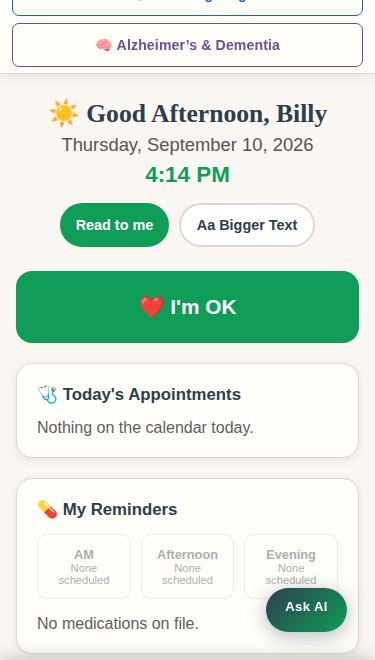
Have you checked in today?
It only takes a moment, and it helps your family know how you're doing.